







Tokyo A to Z City Guide
Many of our scents and sensibilities owe themselves to Japan, and in particular to Tokyo, a city in which one could spend eras, but if all you had were The Remains of the Day, here’s one approach...
Begin with a soak at Thermae-Yu, where all you will need is a proclivity for modest public nudity and a tube of Redemption Body Scrub. Preened, pop your head into Aesop Ginza SIX, en route to Higashiya Ginza for exquisite teas and wagashi—elegant confections that look like they may hatch Pokémon. Then flip a yen to decide between a cool bowl of soba or a pot of steaming shabu-shabu. And to climb off lunch later, ascend to the 52nd floor of the Park Hyatt Tokyo, to enjoy a Yamazaki 12-Year Whisky (neat, in an Edo Kiriko glass) and Aesop amenities.
Scribbled on the backs of Kirin coasters and collected by curious Aesopians, the recommendations in this guide will help you to eat, drink, feel, smell and listen your way through this great city.

A to Z list
A
Arts & Science, Daikanyama
A philosophy disguised as a shop.
14-1 Hachiyama-cho Shibuya-ku Tokyo 150-0035
B
Browse ‘Kitchen Town’
Eight hundred metres of cooking supplies. Begin at Kama-Asa Shōten.
2 Chome-24-1 Matsugaya, Taito City, Tokyo 111-0036
C
Cow Books
Left-leaning in spirit, right on taste—paperback manifestos for thoughtful radicals.
1-14-11 Aobadai, Meguro-ku, Tokyo 153-0042
D
Dream House
Drift away from the city and into a world of reverie at Marina Abramović’s singular space.
942-1432 643 Yumoto, Matsunoyama, Tokamachi-city
E
Enoura Observatory
Hiroshi Sugimoto’s coastal opus—a transformative daytrip. For another artistic expedition, travel Shinkansen-speed to Chichu museum, Naoshima.
F
G
Gotokuji Temple
Temple of beckoning cats, rows upon rows of porcelain optimism waving eternity into being.
2-24-7 Gotokuji, Setagaya-ku, Tokyo 154-0021
H
Harukor Restaurant
Ainu cooking and craft.
1-10-1 Hyakunin-cho Shinjuku Tokyo 169-0073
I
Incense Ceremony (Kōdō)
A sister to traditional tea ceremonies, during which one ‘listens’ to scent. Events are occasionally hosted at Japan House.
J
Jazz Bars
Shake a leg, solo or with an ensemble, to any or all of these: Jazz Spot Intro, Hello Dolly, or Bar Martha.
K
Kazuo Ohno Studio
Home of the Butoh pioneer.
1 Chome-20-15 Kamihoshikawa, Hodogaya Ward, Yokohama (short train from Tokyo)
L
Latte as art over Latte art, at Koffee Mameya
Precision brewing.
4-15-3 Jingumae, Shibuya-ku, Tokyo 150-0001
M
Meiji Jingu Shrine
A forest at the city’s heart.
1-1 Yoyogikamizonocho, Shibuya-ku, Tokyo 151-8557
N
Nihonbashi, Sumo Training
Morning practice is from 7:30 to 09:00 a.m. and free to watch.
Arashio-beya, 2-47-2 Hama-cho, Chūō-ku, Tokyo 103-0007
O
Ogikubo Antiques
Small dealers and Shōwa-era treasures.
Around Nishi-Ogikubo Station, Suginami-ku, Tokyo
P
Park Hyatt Tokyo
A glass and marble sanctum with views that defy translation.
3-7-1-2 Nishi-Shinjuku, Shinjuku-ku, Tokyo 163-1055
Q
Quiet in the cacophony
By Tadao Ando, the boxer-turned-architect and master of concrete stillness. Start with La Collezione, 21_21 Design Sight, and the Tokyo Art Museum.
R
Recalibrate at the Old Imperial Bar
Order a Yamazaki 12-Year Whisky and become your own Ozu protagonist.
1-1-1 Uchisaiwaicho, Chiyoda-ku, Tokyo 100-8558
S
T
Toyosu Fish Market
The ballet of knives at dawn. Bring curiosity, not cologne.
6-6-1 Toyosu, Koto-ku, Tokyo 135-0061
U
Uosan Sakaba
An izakaya of sake-soaked storytelling.
1 Chome-5-4 Tomioka, Koto City, Tokyo 135-0047
V
Vacancies at Book and Bed Tokyo
A capsule hostel for those who would rather read than sleep.
Kabukicho APM Building 8th floor 1-27-5 Kabukicho, Shinjuku-ku, Tokyo 106-0021
W
Womb
A club where Techno is a spiritual exercise.
2-16 Maruyamacho, Shibuya-ku, Tokyo 150-0044
X
Xenial design by Shinichirō Ogata’s Simplicity Studio
Longtime friend, creative co-conspirator and architect of atmospheres, Shinichiro Ogata never begins with a design in mind, instead he follows the history and climate of a location and lets it reveal itself. Visit each one of his stores and restaurants. Enlightenment will be your reward.
Y
Yōhin-ten (Kanaya Brush, Asakusa)
A store devoted entirely to the brush: for curls, calligraphy, corners of the home—or mind.
1-39-10 Asakusa, Taitō-ku, Tokyo 111-0032
Z
Zojo-ji Temple
Cedar and vermilion facing Tokyo Tower; the ancient bowing to the modern.
4-7-35 Shibakoen, Minato-ku, Tokyo 105-0011
The city through the senses
Listen
Kaoru-san, local resident and mackerel summoner noted earlier, once told The Sensorialist that Tokyo is a city built on transportation. For this reason, the steady grumble and glide of train tracks remains a defining sound—a rhythm of progress, of collective motion, of going somewhere, often sardine-like (she is very fond of fish), but together. Big Love Records, the long-standing site for sore ears in Harajuku, might ‘hear’ the city as the pop sounds of Aya Gloomy or Nana Yamato. And analogue acolytes down at Five G Music Technology, Tokyo’s legendary synthesiser emporium, might imagine it as something lifted from an Akira-esque reality. In this sense, how Tokyo sounds depends on what you choose to listen to—or for. At Aesop, it may be somewhere between Keith Jarrett’s Encore from Tokyo, Hako Yamasaki’s 'Sasurai' and of course, the late Ryuichi Sakamoto’s Bibō no Aozora, a piece that mirrors Tokyo’s inimitable ability to remain still, even while moving at great speed.
Taste
Fortunately, Tokyo is egalitarian when it comes to eating—delicious meals await down alleyways, in black lacquered bowls set atop wooden counters, their steam rising into anonymous faces, beneath the neon hum of vending machines such as Niikura Mansei in Chiyoda, which dispenses warm tonkatsu sandwiches, among the aisles of the ubiquitous Family Mart–(Kombu Onigiri is essential), or with Bon Taito, an unassuming restaurant serving Buddist Fucha Ryori, a cuisine that happens to be vegan.
Breakfast however—as is often the case—may offer the truest introduction to the national cuisine: a bowl of miso, plain rice (untouched by soy sauce so its subtleties can be heard, not drowned out), a modest piece of grilled salmon, and natto: that stringy, stubborn fermented soybean that may resist affection until, suddenly, it earns it.
Smell
Tail of the Mackerel
On a recent trip to Paris, when The Sensorialist sat down with Kaoru-san, architectural project manager for Aesop Japan, at Délicatessen Place (an exceptional wine bar) a fragrant fable was shared.
While preparing the architectural brief for what would become Aesop Nakameguro, Kaoru-san walked along the canal where the store would be located, looking for inspiration. What stopped her was not what she saw, but what she smelled: grilled mackerel: a scent of comfort, of childhood, of...lunch. Though she could not see its source, Karu-san imagined a grandmother bent over a hibachi, turning the fish with care.
In that moment she was carried aboard the aroma to the films of Yasujirō Ozu: those portraits of domestic grace and everyday ritual. From that vision the brief was born, composed in smoky reverie and later, on the 52nd floor of the Park Hyatt Tokyo, presented to Aesop’s founder, who circled a single word ‘domestic’ and offered an unequivocal ‘hai’. Simplicity, led by Shinichirō Ogata, cooked up the rest.
Touch
Though Mary Poppins never visited—the typical Tokyo home might have inspired her to sweep the lyrics of Supercalifragilisticexpialidocious into a haiku.
One thing that does indeed ‘spark joy’ for us is a bag, or buckle, or both, from Cornelian Taurus by Daisuke Iwanaga–contender for the world’s most mystical company name, and purveyor of superb leather goods. Iwanaga creates objects that seem to beckon, not ask, to be held. One does not simply touch a piece of theirs, one feels it, and through that contact, the hundreds of hours spent tanning, dyeing, shaping, and sewing
In Tokyo, touch is also embraced through Butoh: part rebellion against Western idealism, part embodiment of the Earth itself. In ballet, one reaches for the heavens; in Butoh, the dancer’s feet go into the ground, and the body listens through its soles, shoes off, toes to tatami. If you have not already begun your apprenticeship in Butoh appreciation—which is lifelong and entirely inspiring—remove your slippers and begin with Kazuo Ōhno, its guiding spirit.
See
Kenya Hara, author of White, has a black belt in restraint. A curator, writer, and since 2002, the art director of MUJI, Hara appears to view the world through Ma: an appreciation of what is not seen.
Eager entrepreneurs, whose gaze often fixes on what comes next, would do well to study him. His book Designing Design remains a wellspring of projects wrought by integrity over passing trends, and reduction over mindless spectacle.
Perhaps though, Tokyo’s beauty lies not in what is seen, but in how it is seen—in the sensitivities that shape its inhabitants and their surrounds. Hara’s devotion to what is clearly invisible echoes in the surfaces of modernist painter Hideko Fukushima, whose abstract works capture silence; and in the distilled observations of Mayuzumi Madoka, who, through her haiku, polishes words into wisdom, tempered by humour. These same sensibilities influenced travellers, too, such as a young Charlotte Perriand, who designed, among other things, low tables and bamboo chairs, clearly enriched by her exposure to the city and its sensibilites
Sundry suggestions
Pre read and watch list
Pre read and watch list
Books and films for visitors and armchair tourists alike.
Read
Breasts and Eggs, Mieko Kawakami
Far Beyond the Field: Haiku by Japanese Women, Makoto Ueda
In Praise of Shadows, Jun’ichirō Tanizaki
The Name of the Flower, Kuniko Mukoda
Strange Weather in Tokyo, Hiromi Kawakami
White, Kenya Hara
Watch
Shoplifters, Hirokazu Kore-eda
For children or the child within…
To free up parents’ hands as little ones wash theirs.
Hands down the best puppet shows since 1971.
Ten thousand toys, wow.
Useful links to practical and poetic things
Comprehensive resource for vegans and vegetarians.
Japanese films with English subtitles.
Solid journalism on all things Japanese.
Part cinema, part bookshop and curators of exceptional talks and events.
The Sensorialist Tokyo, a playlist
A selection inspired by the city.
Essentials for Tokyo
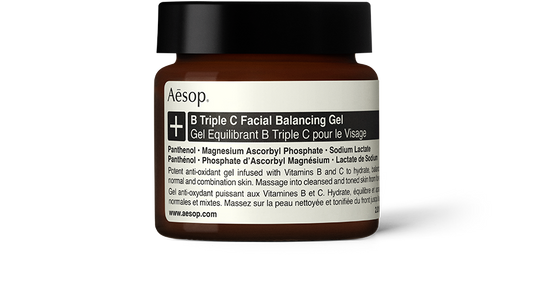

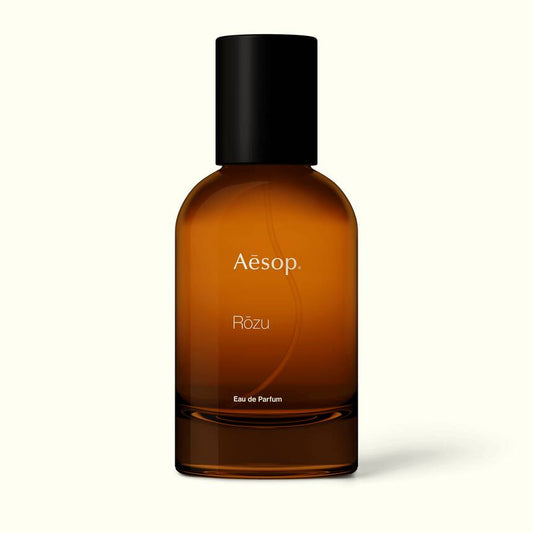
Stores of stories
Spin a bottle of Ramune and see which one you land on. Aesop’s stores, and consultants are a reliable way to get to know a city, and its history.

Recommended reading
-

The Aesop Women's Library
one-minute read -

Introducing the fragrant fables
three-minute readA new chapterIntroducing the fragrant fables
-

A guide to fragrance
nine-minute readLesson from the labA guide to fragrance


‘Seek not the paths of the ancients; Seek that which the ancients sought.’
Matsuo Bashō